eu cleantech
quarterly briefing
Download the printable version
3Q26

Welcome to Your Q3 2026 Briefing

VICTOR VAN HOORN
Director
As Europe enters the final months of 2026, the Strait of Hormuz remains largely closed to commercial shipping, extending a disruption that began in late February. Eight months on, energy prices remain high and the risk of physical shortages persists. Managing those immediate risks requires careful winter preparedness. The lesson for the longer term is equally clear: Europe must embed resilience into its energy system, reducing the structural dependence that leaves households and industry exposed to successive shocks.

The direction is now clear. President von der Leyen’s State of the Union address placed electrification at the heart of Europe’s energy independence. Fossil fuel imports have now cost Europe an extra €100 billion since the conflict began, without adding any energy to the system. The task is to electrify what we can, as fast as we can, with homegrown energy. This gives Europe a path towards greater security and affordability while advancing decarbonisation. It also accompanies a cautious effort to reassess its economic relationship with China, with greater attention to strategic vulnerabilities and the conditions for fair competition.

The data in this briefing shows encouraging, though uneven, progress. EU cleantech venture and growth investment reached €2.5 billion in Q3, 43% above the same quarter last year, and debt financing reached €7.8 billion, its strongest quarter since early 2024. Yet three rounds accounted for half of equity investment, while deal activity fell to 73. Larger transactions demonstrate that European companies can attract substantial backing, but declining early-stage activity risks weakening the pipeline behind them.

Energy-efficient computing attracted more than a third of equity investment. In the age of AI, digital infrastructure is pivotal to autonomy and national security, and Europe will need to build its own. It must do so aware of the additional strain data centres place on electricity grids, at a time when electricity demand is already growing as transport, heating and industry increasingly electrify. Grids, storage, flexible demand and firm clean power such as next-generation geothermal will determine whether Europe can manage both shifts at once.

Turning this momentum into industrial capacity now depends on three policy decisions due in the coming months.

The first is the Industrial Accelerator Act. With Chinese overcapacity weighing on European producers and Chinese investment moving into strategic value chains, the IAA is Europe’s chance to create lead markets for European production and to attach real conditions to foreign investment. The Franco-German agreement of 16 October brings welcome clarity, with a tight “Made in Europe” definition limited to the EU and a few reciprocal partners. However, moving automotive provisions out of the IAA and into the Automotive Package, in exchange for softer car CO₂ targets, sends the wrong signal. It separates demand for European vehicle components from the rest of the IAA framework and risks delaying it. For batteries, where resilience requires investment throughout the value chain, including anode active materials and cathode precursors, keeping these provisions in the IAA would give manufacturers a clearer and earlier signal to invest.
‍
The second is the ETS review. A credible ETS price trajectory matters twice as it strengthens the business case for clean technologies and generates revenues to finance projects and deployment. Weakening it undermines both private investment and public funding. Our ETS paper makes the case for defending this signal while using revenues more effectively. CBAM must reinforce that framework by extending carbon pricing to imports, while addressing competitive distortions further down the value chain.

The third is financing. Our Innovation Fund paper addresses the obstacles preventing funding commitments from becoming operating projects, so that companies can reach financial close on first commercial plants. The proposed Investment Booster, as a first step towards the Industrial Decarbonisation Bank, should reward frontrunners already investing. Yet the next EU budget is heading the other way: it risks reducing funding for future industries while protecting traditional priorities. Negotiations are edging towards a smaller budget focused overwhelmingly on agriculture and cohesion, with the European Competitiveness Fund cut by around 13% in the latest proposal. Without an EU strategy to scale and fund manufacturing, the burden will shift to national budgets, deepening differences between Member States and weakening the single market.

Policymakers have a narrow window to advance these files before key national elections in 2027 reshape Europe’s political landscape. Our Summit on 1 December will bring these questions together, with a focus on aligning industrial ambitions with credible demand, effective financing and investment certainty. Europe’s security and lasting prosperity increasingly depend on its ability to turn those ambitions into industrial strength.

A market maturing around
companies ready to scale

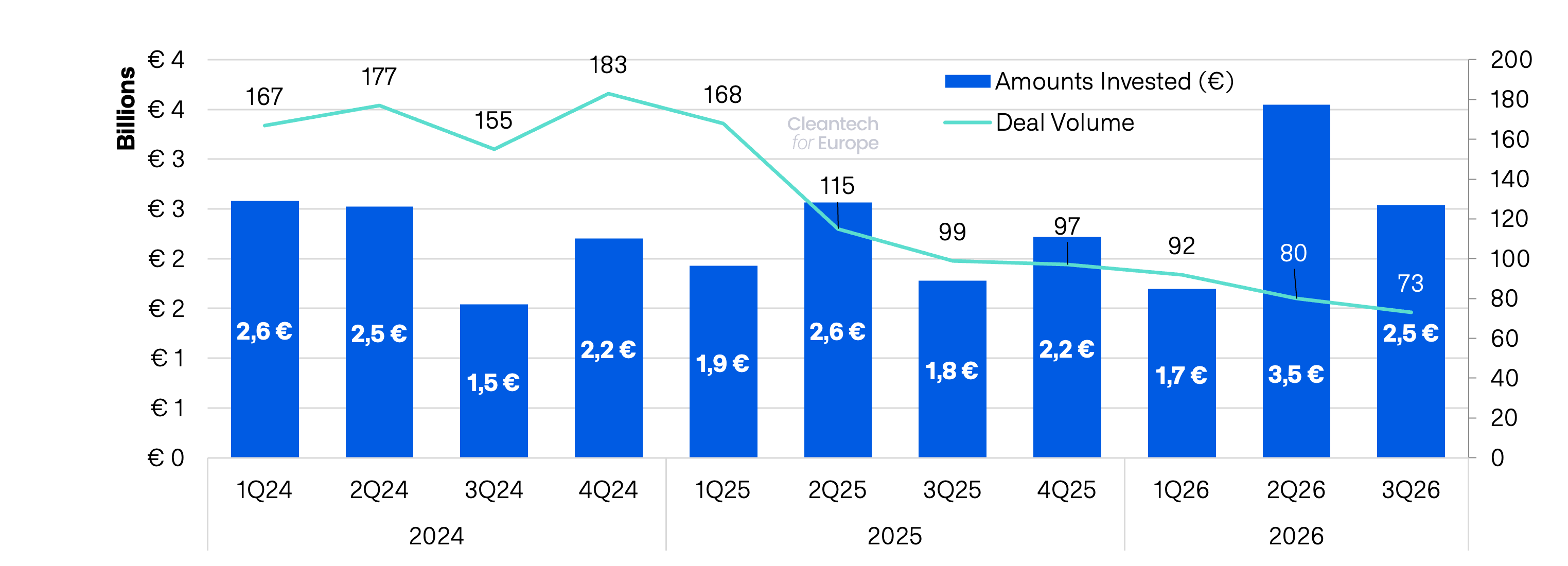
Three quarters into 2026, capital in Europe’s cleantech market keeps concentrating. Deal count has fallen every quarter since late 2024, from 183 in Q4 2024 to 73 in Q3 2026, while capital invested has held up, reaching €7.8 billion over the first nine months of 2026, 24% more than a year earlier.
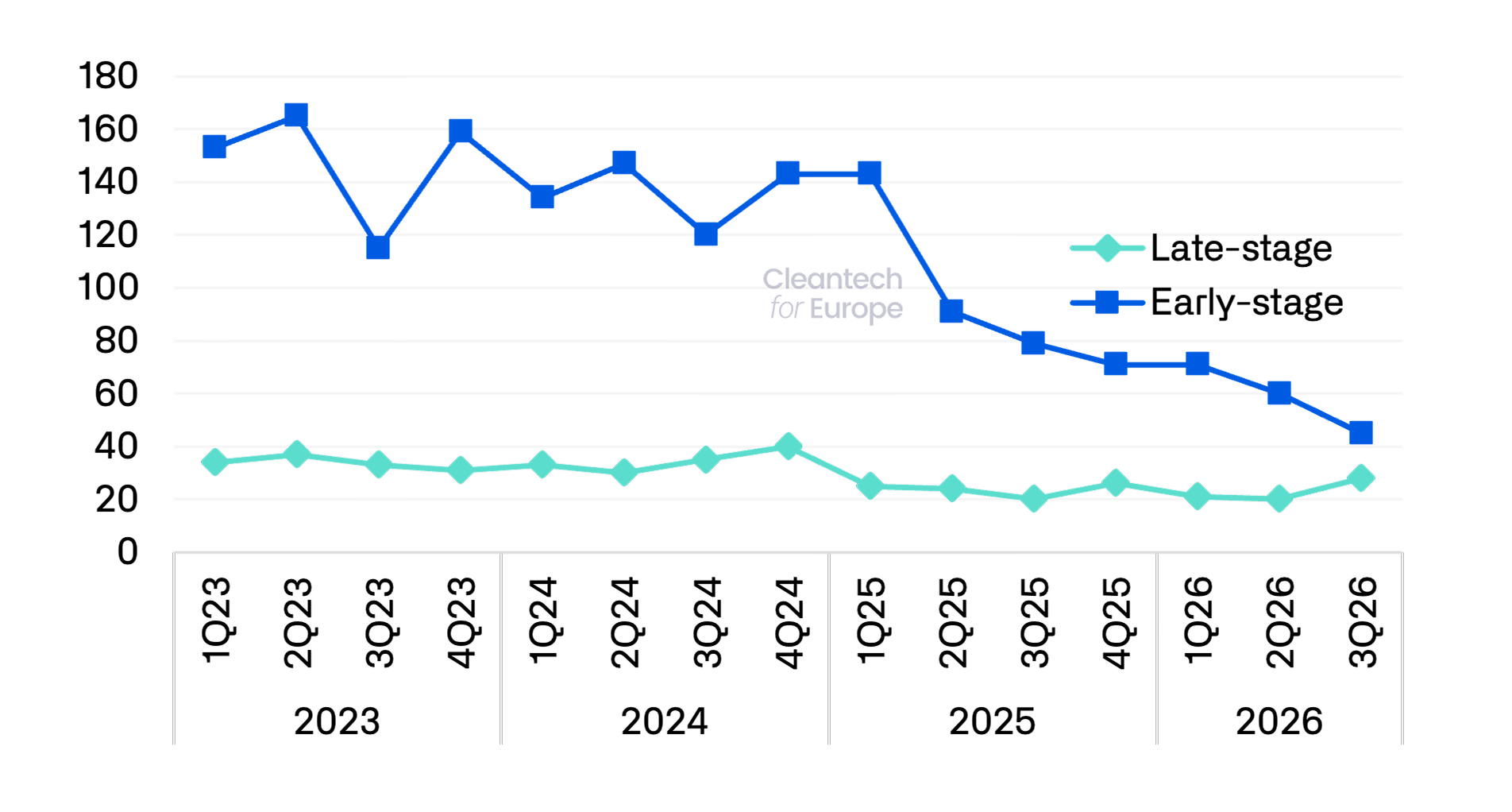
Capital is going into fewer and larger rounds rather than being spread across many small tickets. Average deal size nearly doubled year-on-year to around €35 million in Q3, and three rounds accounted for half of the quarter’s €2.5 billion: fusion developer Proxima Fusion, and two companies outside pure-play cleantech, Multiverse Computing, whose quantum-inspired software cuts the energy needs of AI models, and The Exploration Company, which puts reusability at the core of its business case for orbital vehicles. Late-stage deals rose to 28, their highest level since late 2024, while early-stage deals fell to 45.
This is a market maturing around companies ready to scale. The task now is to keep the pipeline behind them well supplied, so that today’s seed and Series A companies can reach the same stage.
EU27 Cleantech Venture and Growth Investment, 1Q 2024 – 3Q 2026

Executive Summary

EU cleantech venture and growth investment reached €2.5 billion in Q3 2026, 43% above Q3 2025, bringing the first nine months to €7.8 billion, up 24% year-on-year.
Deal flow kept contracting, with 73 equity deals in Q3, the lowest quarterly total in the period analysed, while average deal size nearly doubled year-on-year to around €35 million.
Three rounds made up half of the capital: Proxima Fusion (fusion power) and two companies beyond pure-play cleantech, Multiverse Computing (energy-efficient AI software) and The Exploration Company (reusable orbital vehicles). Late-stage deals rose to 28, while seed and Series A fell to 45, down 43% year-on-year.
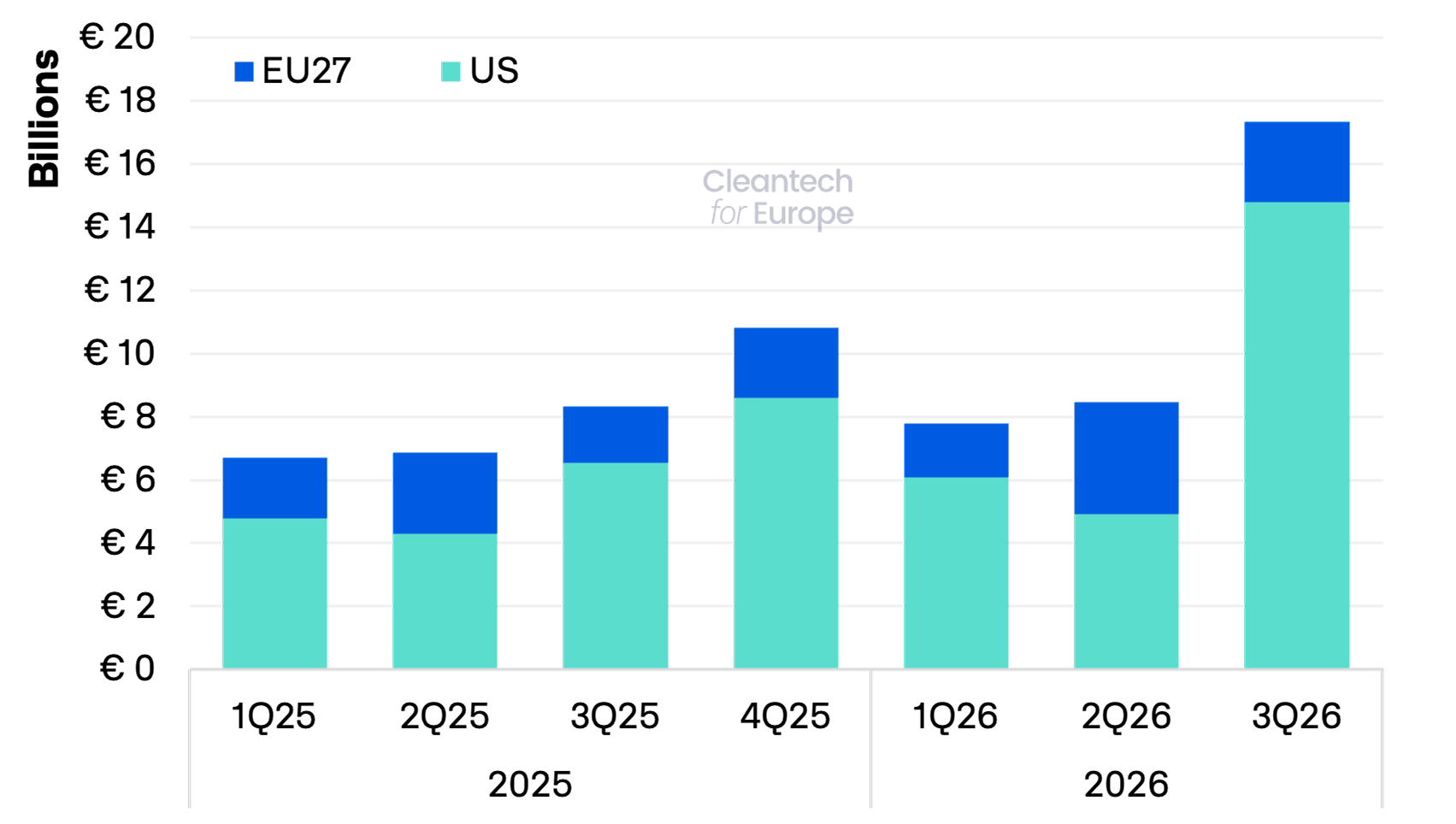
US investment tripled to €14.8 billion, almost six times the EU level, driven by AI computing infrastructure and megarounds in fusion, fission and storage.
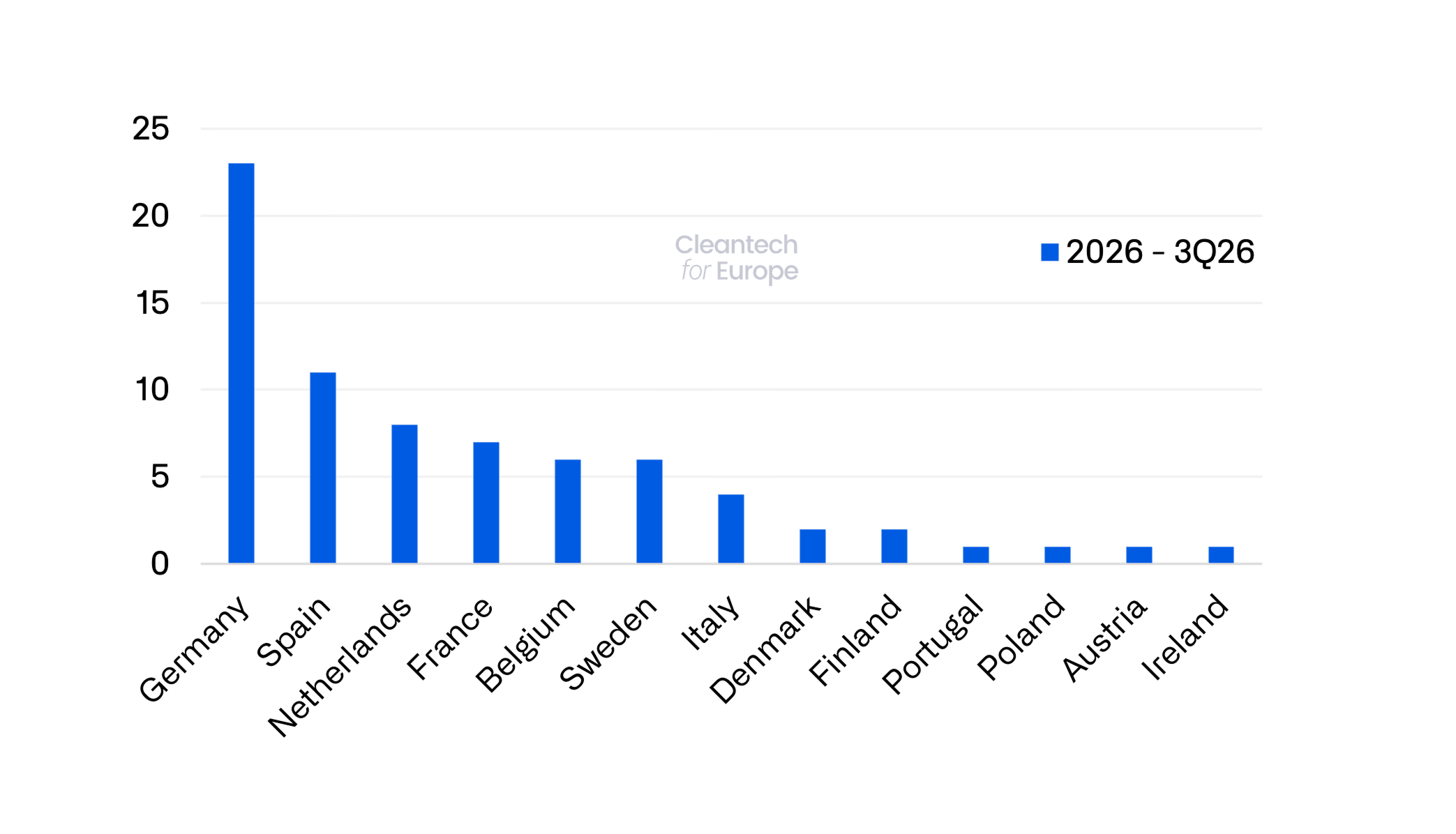
Deals spanned 13 of 27 Member States. Germany led with 23, ahead of Spain (11), the Netherlands (8) and France (7).
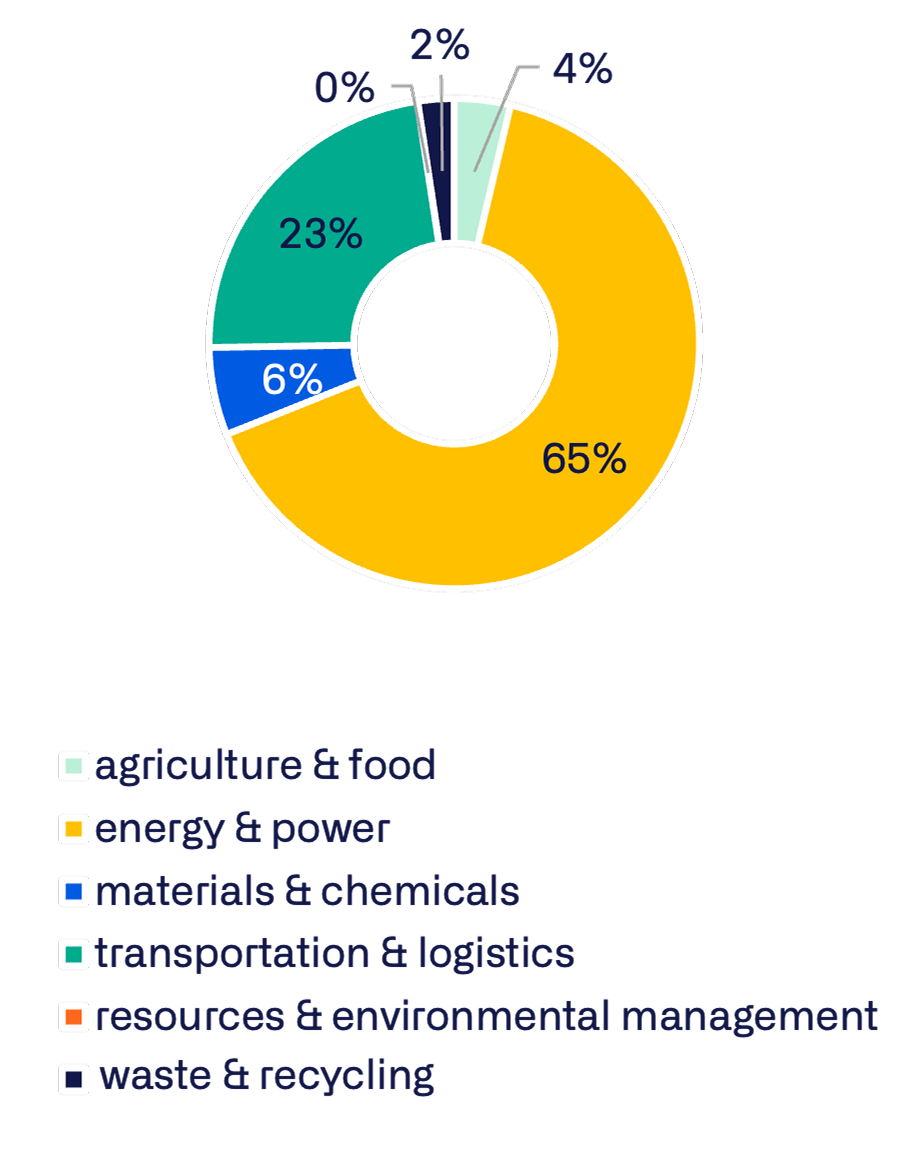
Energy & Power captured 65% of capital, largely through energy-efficient computing, followed by Transportation & Logistics (23%).
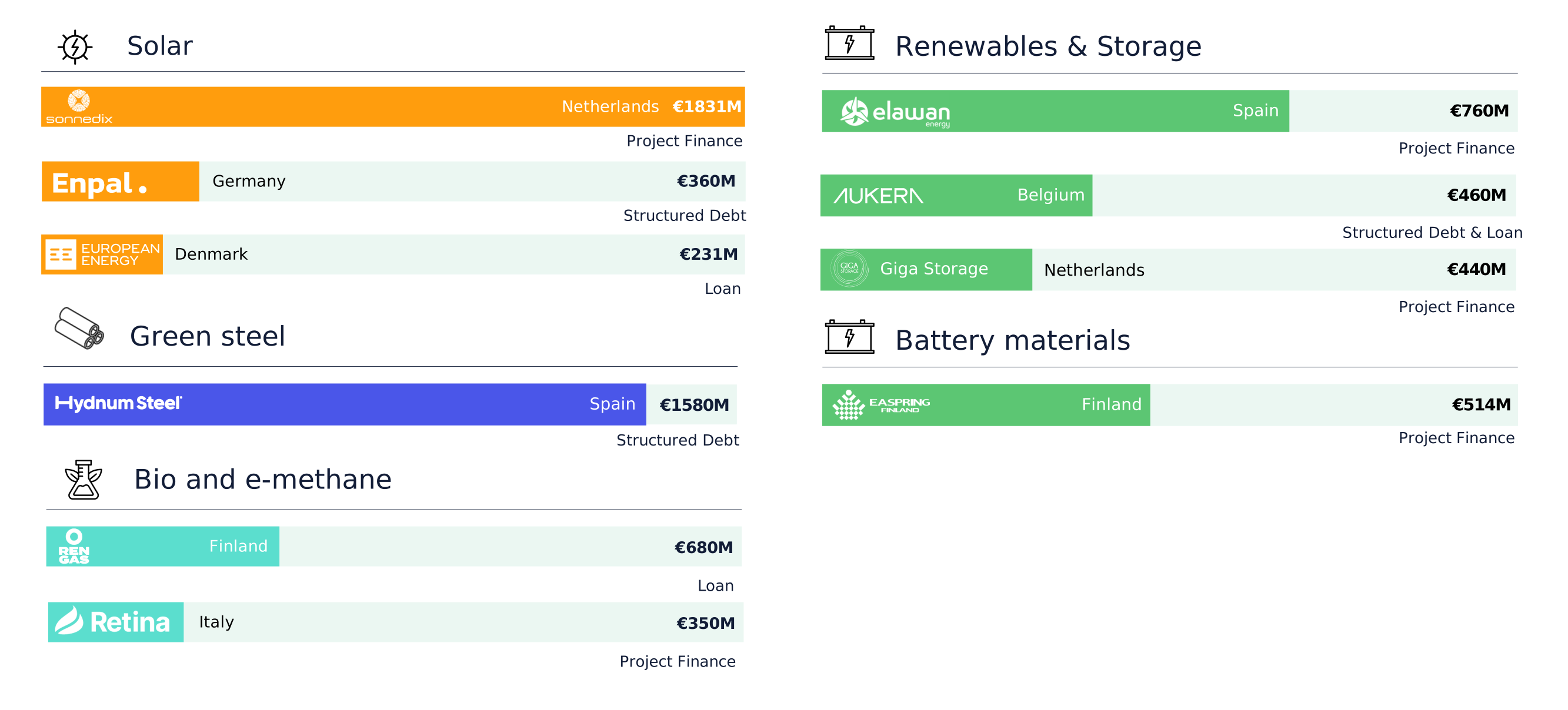
EU cleantech debt investment reached €7.8 billion across 25 deals in Q3 2026, the strongest quarter since Q1 2024.
Large project and industrial financings led, from Sonnedix (€1.8 billion for solar and storage assets in Southern Europe and Chile) and Hydnum Steel (€1.6 billion for a green steel plant in Spain) to Easpring (€514 million for a battery cathode materials plant in Finland).
EU debt exceeded US debt (€5.6 billion) by the widest margin since Q1 2024.
On the IAA, the Franco-German deal of 16 October on a strict “Made in Europe” definition for cars and a third Council compromise are reshaping talks.
The 12 October Environment Council exposed Member State rifts on the ETS cap trajectory, conditional free allocation and international credits.
In the 2028-2034 MFF talks, the Irish Presidency proposes cutting the European Competitiveness Fund by €3 billion.
The Scaleup Europe Fund, live since August, made its first tickets in ICEYE, The Exploration Company and Euclyd. The Institutional Investors Pact was launched on 22 September. And Commission’s DG ENER opened applications for its new Energy Transition Investment Council.
Cleantech for Europe published papers on the ETS and the Innovation Fund, helped launch the CFG Geothermal Working Group, and holds its Summit on 1 December.

01

Q3 2026: Investment holds significantly above 2025 levels

€2.5
billion

INVESTED IN EU CLEANTECH IN Q3 2026

Amount invested stood 43% above Q3 2025, while deal volume fell to a new low

EU Investment Holds,
US Surges on Megadeals

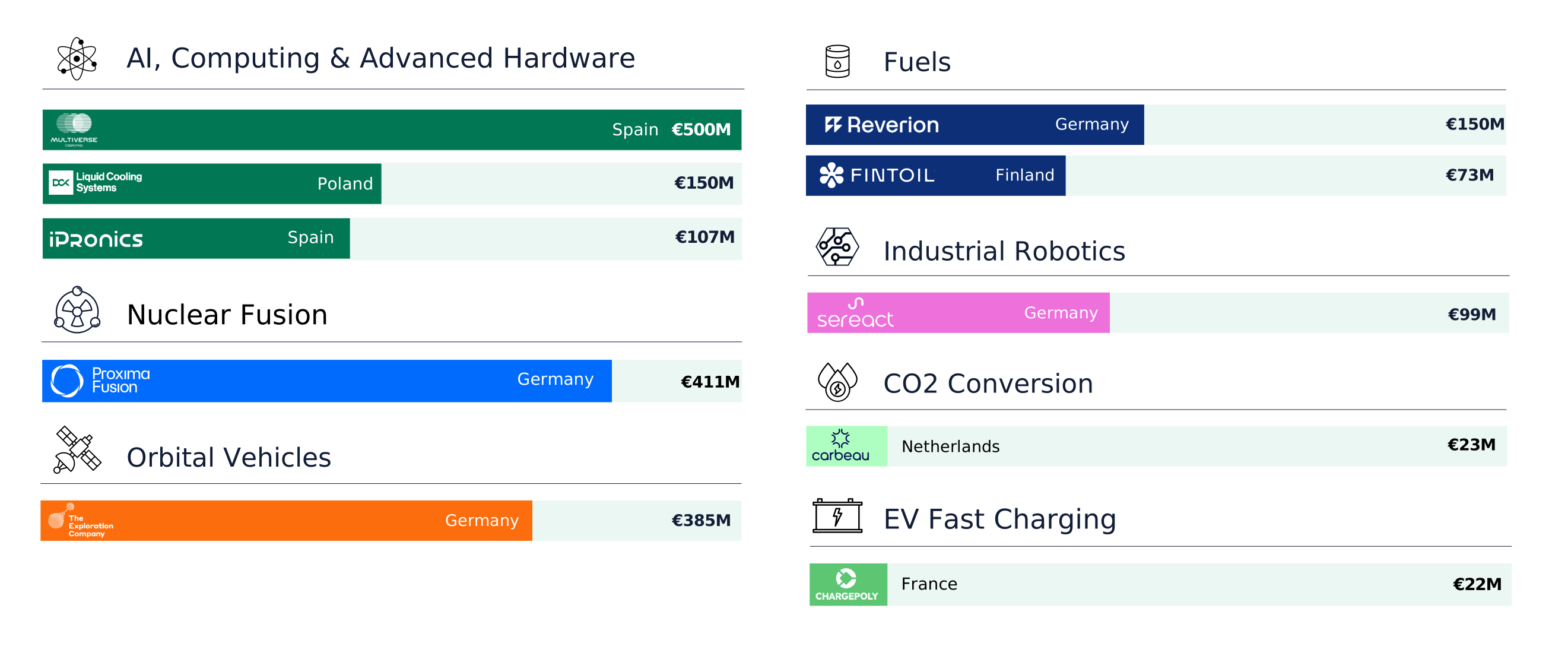
EU cleantech venture and growth investment reached €2.5 billion in Q3 2026, down from an exceptional €3.5 billion in Q2 but 43% above Q3 2025. Half of it came from three rounds: Proxima Fusion (€411 million), which is developing stellarator fusion power plants, and two companies beyond pure-play cleantech, Multiverse Computing (€500 million), whose quantum-inspired software cuts the energy use of AI models, and The Exploration Company (€385 million), whose business case rests on reusable orbital vehicles.
US investment tripled quarter-on-quarter to €14.8 billion, almost six times the EU level. A third came from two rounds in energy-efficient computing for AI, Crusoe (€3.3 billion) and Joulent (€1.5 billion), and over a quarter from fusion, fission and storage, including Commonwealth Fusion Systems, Valar Atomics, Base Power and Form Energy. Next-generation geothermal also drew €285 million in the US, led by Quaise and Mazama Energy.
Deal activity kept thinning, with 73 equity deals in Q3, down from 80 in Q2 and 99 a year earlier. Average deal size nearly doubled year-on-year to around €35 million.
The squeeze is concentrated at the early stage. Seed and Series A deals fell to 45, down 25% on Q2 and 43% on Q3 2025, while late-stage deals rose to 28, their highest level since Q4 2024.
Cleantech Venture and Growth Investment, EU vs US, 2025 – Q3 2026
EU27 Cleantech Venture and Growth deals by stage, 2023 – Q3 2026

Q3 Deal distribution:
‍
geography & sectors

Cleantech venture and growth deals were recorded in 13 of the EU’s 27 Member States in Q3 2026, a narrower footprint than in H1 (19).
Germany led with 23 deals, followed by Spain (11), the Netherlands (8), France (7), Belgium and Sweden (6 each) and Italy (4). Germany alone accounted for almost a third of EU deals and the four leading countries for two-thirds, while Spain’s second place, with Multiverse Computing and iPronics, marks a strong quarter for its ecosystem.
Energy & Power attracted 65% of capital invested, followed by Transportation & Logistics (23%). Materials & Chemicals (6%), Agriculture & Food (4%) and Waste & Recycling (2%) trailed far behind, while Resources & Environmental Management drew almost no capital.
Energy & Power’s lead reflects computing more than generation. Energy-efficient computing, with Multiverse Computing, Euclyd, DCX and iPronics, accounted for over a third of all capital invested, as the energy footprint of AI draws investors towards efficiency technologies.
Broadening this pipeline beyond a handful of Member States and sectors, while helping more companies access scale-up capital, remains central to strengthening Europe’s industrial base.
EU cleantech venture and growth deals by member state, Q3 2026
EU cleantech venture and growth investment by sector, Q3 2026
Q12024_early_Sensors
Sensors
France
€15M
€15M
Q12024_early_Alternativeproteins
Alternative proteins-Q124
Germany
€15M
€15M
Q12024_early_wastemanagementq124
Waste management-q124
France
€21M
€21M
Q12024_early_industrialmaterials
Industrial Materials
France
€23M
€23M
Q12024_early_carbonremovals
Carbon Removals
Germany
€25M
€25M
Q12024_early_energystorage
Energy Storage
Finland
€26M
€26M
Netherlands
€15M
€15M
Q12024_early_transportation
Transportation
Croatia
€99M
€99M
Austria
€20M
€20M
Italy
€15M
€15M
AB2023_early_Construction
Construction
Germany
€45M
€45M
AB2023_early_Hydrogen Fuel Cells
Hydrogen Fuel Cells
France
€46M
€46M
AB2023_early_Nuclear fission
Nuclear fission
France
€50M
€50M
AB2023_early_Supply chain Logistics
Supply chain & Logistics
Germany
€50M
€50M
AB2023_early_EV Charging
EV Charging
Germany
€70M
€70M
AB2023_early_Heat pumps
Heat pumps
Sweden
€86M
€86M
AB2023_early_Carbon Management
Carbon Management
Germany
€100M
€100M
AB2023_early_Green IT
Green IT
France
€100M
€100M
France
€90M
€90M
AB2023_early_Electric Vehicles
Electric Vehicles
France
200M
200M
3Q23__Others__Logistics
Transportation & Logistics
Germany
€177M
€177M
3Q23__Others__Hydro
Green Hydrogen
Germany
€169
€169
Netherlands
€130M
€130M
3Q23__Others__CRM
Critical Raw Materials
Ireland
€184
€184
3Q23__Others__Plastic
Plastic Alternatives
Netherlands
€338M
€338M
Germany
€130M
€130M
3Q23__Others__Energy
Energy & Power
Germany
€685M
€685M
3Q23__Others__EV
EV Batteries
Sweden
1100M
1100M
France
€650
€650
France
€600M
€600M
3Q23__Late__Energy
Energy & Power
Sweden
€45M
€45M
3Q23__Late__Hydro
Green Hydrogen
Portugal
€61M
€61M
3Q23__Late__Agri
Agriculture & Food
Belgium
€72M
€72M
Netherlands
€32M
€32M
3Q23__Late__Solar
Solar
Lithuania
€93M
€93M
3Q23__Late__Construction
Buildings & Construction
France
€106M
€106M
Ireland
€26M
€26M
Netherlands
€25M
€25M
3Q23__Late__EV
EV Batteries
France
€850M
€850M
3Q23__Late__Steel
Green Steel
Sweden
€1500M
€1500M
3Q23__Early__Geo
Geospatial Imagery
Germany
€17M
€17M
3Q23__Early__Transportation
Transportation & Logistics
Germany
€18M
€18M
Spain
€16M
€16M
3Q23__Early__Quantum
Quantum Computing
France
€19M
€19M
3Q23__Early__Energy
Energy & Power
Germany
€25M
€25M
3Q23__Early__Agriculture
Agriculture & Food
Denmark
€30M
€30M
3Q23__Early__Plastic
Plastic Alternatives
Germany
€36M
€36M
Finland
€23M
€23M
3Q23__Early__Construction
Buildings & Construction
Germany
€45M
€45M
Germany
€22M
€22M
2Q23__Late__Carbon
Carbon Management
Luxembourg
€34M
€34M
2Q23__Late__Agri
Agriculture
France
€162
€162
2Q23__Late__EV
EV Charging
France
€252M
€252M
Germany
€153M
€153M
Finland
€66M
€66M
Ireland
€57M
€57M
2Q23__Late_Energy
Energy, Energy Storage & Networks
Germany
€433
€433
Germany
€370M
€370M
Sweden
€90M
€90M
Italy
€41M
€41M
2Q23__Early__Electro
Electronic Devices
Germany
€20M
€20M
2Q23__Early__Biotech
Biotechnology
Germany
€20M
€20M
2Q23__Early__Construction
Buildings, Building Materials & Construction
France
€29M
€29M
France
€20M
€20M
2Q23__Early__Logistics
Transportation, Supply Chain & Logistics
Germany
€41M
€41M
Germany
€29M
€29M
France
€21M
€21M
Austria
€18M
€18M
2Q23__Early__Green-IT
Green IT
France
€91M
€91M
2023-Q1-chart__series-B__geo
Geothermal
France
€45M
€45M
2023-Q1-chart__series-B__waste
Waste Management
Netherlands
€50M
€50M
2023-Q1-chart__series-B__agrifood
Agriculture & Food
Denmark
€65M
€65M
Denmark
€47M
€47M
2023-Q1-chart__series-B__buildings
Buildings & Construction
Austria
€93M
€93M
Germany
€44M
€44M
2023-Q1-chart__series-B__blockchain
Blockchain
No items found.
2023-Q1-chart__series-B__solar
Solar
Germany
€215M
€215M
Italy
€117M
€117M
Sweden
€29M
€29M
2023-Q1-chart__series-A__solar
Solar
Ireland
€15M
€15M
2023-Q1-chart__series-A__heatpumps
Heat Pumps
Netherlands
€15M
€15M
2023-Q1-chart__series-A__fusion
Nuclear Fusion
France
€15M
€15M
2023-Q1-chart__series-A__energy
Energy & Power
Slovakia
€16M
€16M
2023-Q1-chart__series-A__agrifood
Agriculture & Food
Netherlands
€21M
€21M
2023-Q1-chart__series-A__geospatial
Geospatial imagery
Latvia
€28M
€28M
2023-Q1-chart__series-A__transportation
Transportation and Logistics
Germany
€42M
€42M
France
€21M
€21M
Germany
€15M
€15M
2023-Q1-chart__series-A__buildings
Buildings
Sweden
€42M
€42M
2023-Q1-chart__series-A__carbon-management
Carbon Management
Germany
€101M
€101M
2022-Q3-chart__transportation-logistics
Transportation & Logistics
Belgium
€20M
€20M
2022-Q3-chart__carbon-management-02
Carbon Management
Sweden
€45.7M
€45.7M
Germany
€10.9M
€10.9M
2022-Q3-chart__food-waste
Food waste
Sweden
€65.7M
€65.7M
2022-Q3-chart__energy-services
Energy Services
Germany
€214.7M
€214.7M
2022-Q3-chart__green-steel
Green steel
Sweden
€297.8M
€297.8M
2022-Q3-chart__advanced-materials
Advanced Materials, Fuels & Chemicals
Netherlands
€15.1M
€15.1M
Denmark
€11.7M
€11.7M
Netherlands
€11.2M
€11.2M
Denmark
€10.2M
€10.2M
2022-Q3-chart__alternative-proteins
Alternative Proteins
France
€16.8M
€16.8M
Finland
€15.3M
€15.3M
2022-Q3-chart__energy
Energy, Energy Storage & Networks
Netherlands
€30.5M
€30.5M
France
€13.9M
€13.9M
Netherlands
€12.3M
€12.3M
2022-Q3-chart__electric-vehicles-02
Electric Vehicles
Germany
€50.3M
€50.3M
2022-Q3-chart__supply-chain-logistics
Supply Chain & Logistics
Germany
€153.7M
€153.7M
2022-Q3-chart__crop-inputs-02
Crop Inputs
Slovenia
€14.5M
€14.5M
2022-Q3-chart__biomass-waste
Biomass & waste to energy
Germany
€37.7M
€37.7M
2022-Q3-chart__fuel-cells
Fuel Cells
Denmark
€54.4M
€54.4M
2022-Q3-chart__electric-vehicles
Electric Vehicles
Netherlands
€159.7M
€159.7M
2022-Q3-chart__hydrogen
Hydrogen
Germany
€271.3M
€271.3M
2022-Q3-chart__agriculture-food
Agriculture & Food
France
€485.3M
€485.3M
2022-Q3-chart__carbon-management
Carbon Management
Sweden
€11.6M
€11.6M
2022-Q3-chart__hvac
HVAC
Czech Republic
€15.7M
€15.7M
2022-Q3-chart__solar
Solar
Sweden
€22.9M
€22.9M
2022-Q3-chart__crop-inputs
Crop Inputs
France
€23.9M
€23.9M
2022-Q3-chart__construction
Construction
Spain
€37.9M
€37.9M
2022-Q3-chart__ev-charging
EV Charging
France
€180M
€180M
Denmark
€47.2M
€47.2M
Netherlands
€19.9M
€19.9M
Lithuana
€7.2M
€7.2M

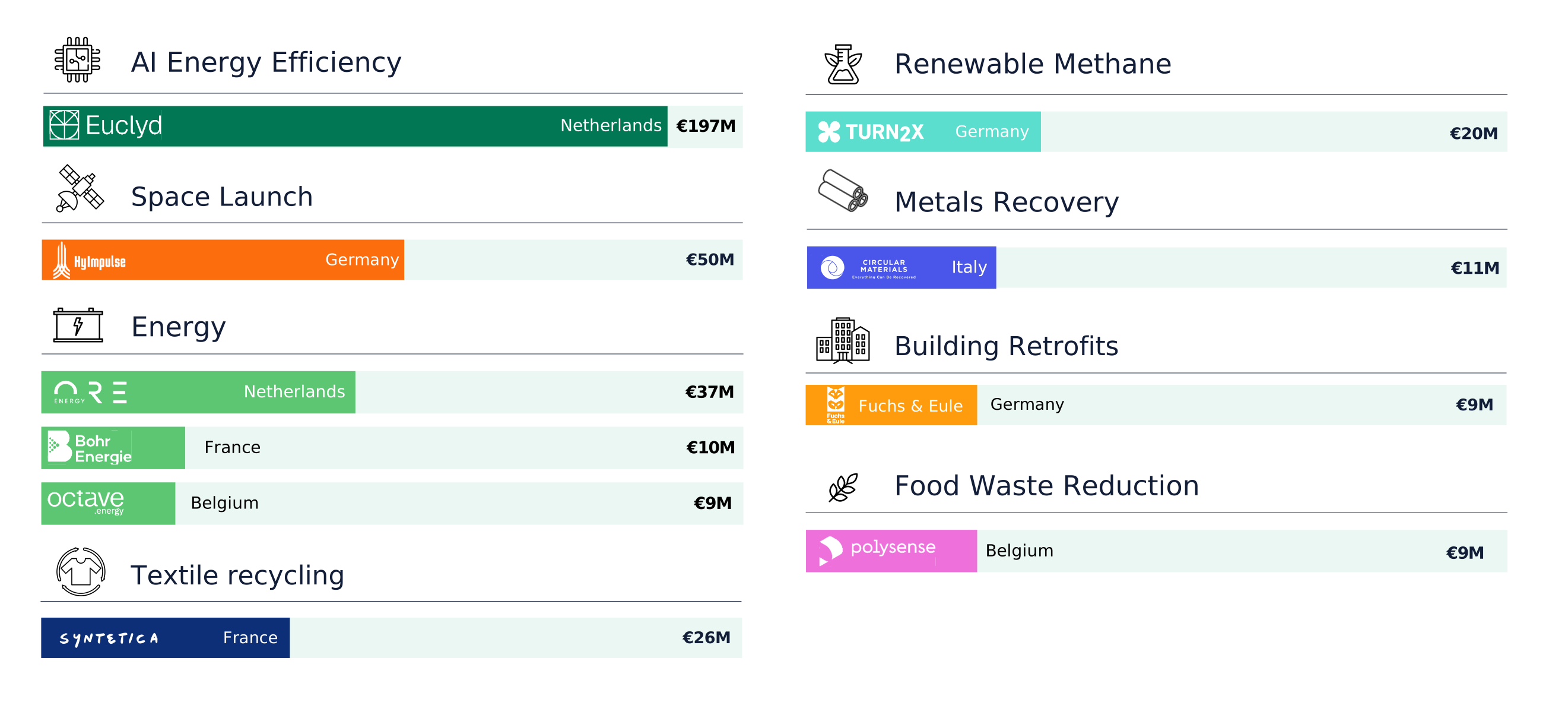
EARLY-STAGE INNOVATION FUNDING
‍
top deals and activities

(Seed and series A)
(Series B and Growth Equity)

THE LATEST FROM 
THE CLEANTECH INVESTMENT ECOSYSTEM

€2.6b

In August, Denmark-based Copenhagen Infrastructure Partners (CIP) announced the final close of its Growth Markets Fund II at around €2.6 billion. The fund targets large-scale renewable energy infrastructure in 15 high-growth, middle-income markets across Eastern Europe, Asia and Latin America, and has already committed €1.3 billion across nine investments, including onshore wind in Romania.

€500m

In July, France-based RGREEN INVEST announced the final close of its Infrabridge IV fund at nearly €500 million, the fourth vintage of its infrastructure debt strategy. The Article 9 fund provides short-term senior debt to the European lower mid-market, financing geothermal energy, biomethane, energy storage and hybrid solar and wind projects with batteries. Around 70% of the fund is already deployed.

€120m

In September, Spain-based Alantra launched Horizon Secondaries, a €120 million energy transition secondaries vehicle anchored by CommonWealth Investments, alongside Blue Earth Capital and Swisscanto. The fund acquired a portfolio of around ten growth-stage companies from Shell Ventures across North America, Europe and Asia, spanning sustainable mobility, low-carbon technologies, electrification and emissions management.

€62m

In July, Sweden-based Norrsken Evolve reached the final close of its pre-Seed fund at €62 million, oversubscribing its initial €40 million target. In September, Nordic utility Fortum joined as a limited partner through its venturing arm. The fund backs 20 to 30 European startups a year with tickets of up to €500,000, across renewable energy, electrification, robotics, AI infrastructure and advanced materials.

€60m

In July, Denmark-based Climentum Capital reached a €60 million first close for its second fund, backed by the European Investment Fund (€40 million), Denmark’s EIFO and the Danish Society of Engineers (IDA). The Article 9 fund, targeting €100 million, leads Seed and Series A rounds in climate hard tech across energy, industry, transport and agriculture, with a focus on the Nordics and DACH.

02

Debt Dive: EU Cleantech Debt Funding

€7.8
billion

Q3 2026 EU cleantech debt investment

Debt dive
EU cleantech debt funding

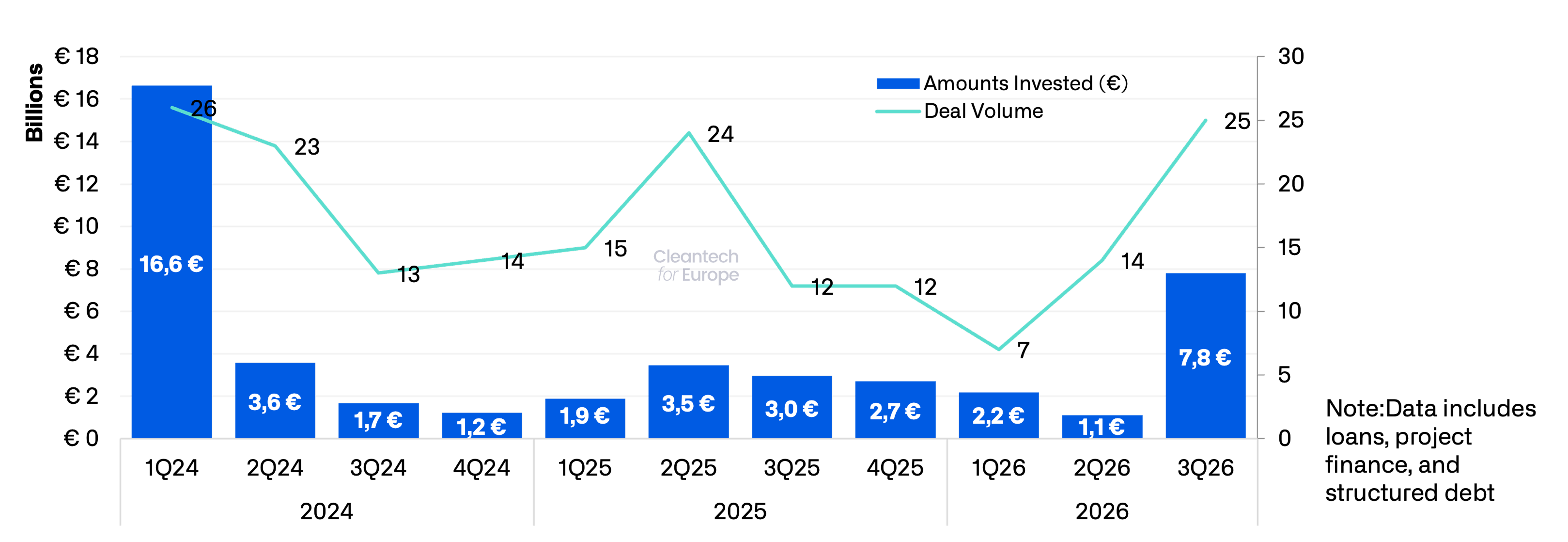
EU cleantech debt investment reached €7.8 billion across 25 deals in Q3 2026, up from €1.1 billion in Q2 and €3.0 billion in Q3 2025, the strongest quarter since Q1 2024. Over the first nine months of 2026, debt totaled €11.1 billion, 34% above the same period of 2025.
Large project and industrial financings drove the rebound. Sonnedix raised €1.8 billion in project finance, Hydnum Steel €1.6 billion for Iberia’s first carbon-free steel plant and Elawan Energy €760 million for a 1.3 GW solar, wind and storage portfolio in Spain. Industrial projects also drew lenders, with €514 million for Easpring’s cathode materials plant in Finland and an EIB framework of up to €680 million for Ren-Gas’ e-methane plants.
EU debt exceeded the US this quarter (€5.6 billion across 33 deals), by the widest margin since Q1 2024.
Unlocking growth-stage debt at scale remains critical for Europe’s clean industrial ambitions. Bankable business models, blended finance structures and public guarantees will be essential to sustain this momentum, and scale-up equity remains the precondition, as it is what unlocks the debt market in the first place.
EU27 Cleantech Debt Investment, Q1 2024 - Q3 2026

Top deals and activities

Beyond Equity
A Closer Look

€1.8b

In August and September, Netherlands-based Sonnedix secured €1.8 billion in project finance across two transactions: a €730 million financing from a syndicate of nine European banks, including ING, Santander CIB and UniCredit, for solar and battery assets across Italy, Spain, Portugal and France, and a €1.1 billion refinancing of its solar and wind portfolio in Chile. The capital will be deployed to refinance operating assets and build new storage capacity, advancing Sonnedix’s strategy of hybridising its solar portfolio with batteries.

€1.5b

In August, Spain-based Hydnum Steel secured a €150 million investment commitment from COFIDES’ Co-investment Fund (FOCO), anchoring a financing plan of over €1.5 billion, including around €1 billion in debt, to build the Iberian Peninsula’s first clean steel plant in Puertollano. The capital will be deployed to build a 2.7 million ton-a-year plant running on electric arc furnaces powered by green hydrogen and renewable electricity, cutting emissions by up to 98% compared to blast furnaces.

€760m

In July, Spain-based Elawan Energy closed €760 million in non-recourse project finance, arranged by Banco Santander and Banco Sabadell, to refinance and expand a 1.3 GW solar PV, wind and battery storage portfolio in Spain. The capital will be deployed across around 1 GW of operating assets and nearly 300 MW under construction, with a 2 GW accordion allowing new projects from Elawan’s pipeline to be added to the same facility.

€680m

In September, Finland-based Nordic Ren-Gas secured an increase of its European Investment Bank debt financing framework to €680 million, up from €230 million, to fund its portfolio of e-methane production plants in Finland. The capital will be deployed as project-level financing for six decentralised plants built with local energy utilities, converting green hydrogen and captured CO2 into synthetic gas for heavy transport and shipping, starting with Tampere in Q4 2026.

€514m

In July, Finland-based Easpring Finland New Materials, a subsidiary of Chinese battery materials group Easpring, signed a €514 million green loan arranged by Standard Chartered, backed by the export credit agencies Sinosure and Finnvera, to build a cathode active material plant in Kotka. The capital will be deployed to deliver a first phase of 60,000 tons of cathode material a year for European electric vehicle batteries, creating around 270 permanent jobs.

€460m

In September, Belgium-based Aukera closed a €460 million structured credit facility led by US institutional investor EIG, expanding an earlier €200 million commitment, to scale its battery-led renewable energy platform across Europe. The capital will be deployed to develop battery storage and renewable projects across Belgium, the UK, Germany, Romania and Italy, drawing on a 14 GW pipeline backed by AtlasInvest, Reggeborgh and Belgium’s sovereign fund SFPIM.

03

Latest from EU Policy

Policy Developments

Scaleup Fund, Investors Pact & Energy Transition Investment Council

The Scaleup Europe Fund, managed by EQT with a €5 billion target, has been operational since August. Backed by the Commission (€1 billion), Novo Holdings, APG, CriteriaCaixa, Santander, Wallenberg and Allianz, it targets rounds above €100 million. Following the initial investments of the fund, the EIC would like it to invest more in deep tech.
On 22 September, the Commission and the EIB launched the Institutional Investors Pact, pairing a policy dialogue forum with an EIB investment platform. Thirteen institutions signalled interest, but no new money has been committed so far.
DG ENER’s new Energy Transition Investment Council, bringing together up to 30 investors, banks and industry bodies, is open for applications until 4 November.

Emissions Trading System (ETS) Revision

On 17 July, the Commission published its ETS revision, with a linear reduction factor of 3.7% for 2031–2035 and 1.7% thereafter, up to 260 Mt of international credits from 2036, free allocation conditional on decarbonisation plans and at least 50% of revenues earmarked.
The 12 October Environment Council exposed deep divisions on the trajectory, conditional free allocation and international credits, with a Poland-Italy coalition for a slower cap reduction gaining ground.
Council and Parliament positions are targeted by end-2026, with trilogues from early 2027. Predictability will be decisive for projects nearing final investment decision.

MFF

Negotiations on the 2028–2034 Multiannual Financial Framework continue under the Irish Presidency, which aims to make progress before the 2027 electoral window narrows.
The European Competitiveness Fund is meant to replace and scale up today’s EU programmes for strategic technologies, carrying much of future cleantech support. The Presidency’s latest proposal would cut it by €3 billion.
A smaller EU-level envelope would shift the burden to national budgets, raising the risk of subsidy races and single-market fragmentation between Member States with and without fiscal room.

Industrial Accelerator Act

Parliament’s draft report of 7 September narrows Union-origin equivalence to the EU27 and EEA, with trade partners admitted via delegated acts subject to reciprocity. Over 6,000 amendments were tabled, including an EPP amendment to reject the text, ahead of a committee vote in November.
On 16 October, France and Germany agreed to soften car CO2 targets in exchange for a strict “Made in Europe” definition for cars, limited to the EU27 and a few reciprocal neighbours such as the UK, Switzerland and Norway. Paris wants to extend it to other IAA sectors, but several Member States resent being sidelined.
The Irish Presidency’s third compromise, tabled the same day, has the Commission list equivalent countries per product after consulting Member States, limits its powers on FDI screening and adds wind to the sectors covered. Experts discuss it on 26–27 October.

Investment Fund and Investment Booster

The European Court of Auditors found that of €11.6 billion committed across 208 Innovation Fund grant agreements only €332 million (2.7%) had been paid out, highlighting the gap between commitments and deployment.
The ETS revision puts the Fund’s future on the table. Proposed Article 10cb frames its mandate around technologies not yet commercially viable, while the Investment Booster ties free allocation to decarbonisation conditions for incumbent industries.
The first Heat Auction (€400 million for 65 projects, from a €1 billion budget) offers a pilot for the Industrial Decarbonisation Bank. Refocused on commercial scale-up and first-of-a-kind projects nearing FID, with tools beyond grants, the Fund could become one of Europe’s most powerful investment instruments.

04

What the future holds

in focus
Electrification Action Plan

A new direction for EU energy policy. Published by the Commission on 17 July alongside the ETS revision, the Electrification Action Plan places electrification at the foundation of Europe's energy security strategy, framing it as a driver of lower fossil imports, competitiveness and industrial transformation. It sets an indicative 46% electrification target for 2040 - up from around 23% today, via 32-33% by 2030.
Energy taxation. After five years of deadlock on the Energy Taxation Directive, the Commission proposes to align the taxation of gas and electricity through a Regulation that bypasses Council unanimity. Today gas is taxed on average twice as heavily as electricity across the EU.
Network tariffs and infrastructure. The plan would make system-friendly network-tariff design mandatory  (equal weight to CAPEX and OPEX, rewards for batteries and smart meters, and locational and time-based signals) and links electrification to the grid and zero-emission capacity needed to decouple power prices from gas.
Made in Europe. It encourages Member States to apply IAA-style "Made in Europe" criteria (EU plus trade-agreement partners) in social leasing schemes, ahead of the conclusion of the IAA negotiations.
A strong signal for cleantech demand. A strong first step, warmly welcomed: the plan finally moves electrification toward the centre of post-2030 energy policy. Measured as electricity's share of final energy, 46% is a highly ambitious signal - the ratio climbs only slowly until fossil assets are displaced, so the target points to electrifying the large majority of Europe's vehicle fleet and building heat within roughly fourteen years. That is exactly the kind of long-horizon demand signal cleantech needs to scale up, provided it is anchored as a binding pillar of the autumn energy security framework and matched by the deployment pace it implies.
For more on this topic:
‍
• The Electrification Action Plan

•
Strategic Perspectives, Boosting Electrification in Europe

Latest news
from Cleantech for Europe

Our ETS and Innovation Fund Papers

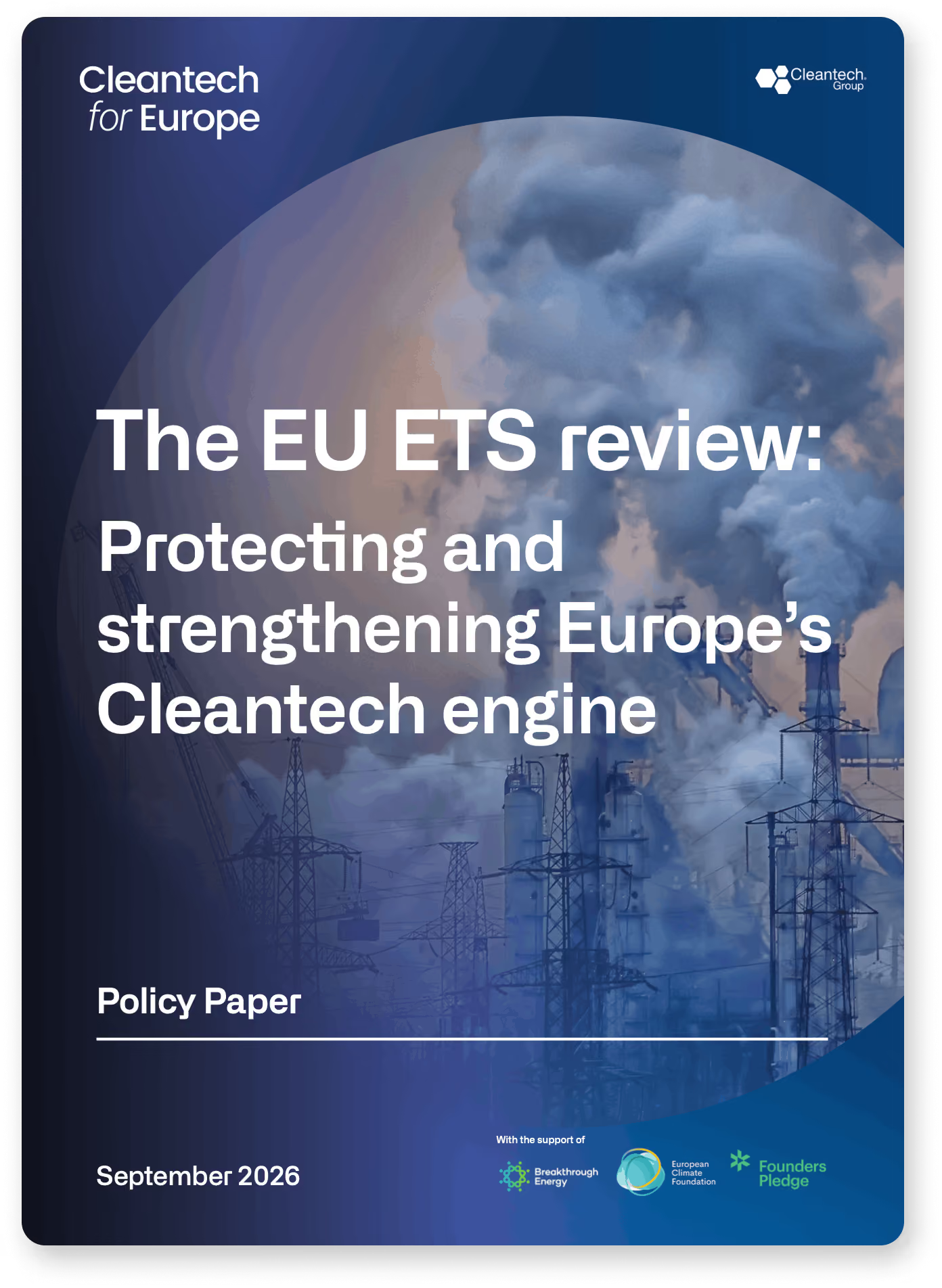
In September, Cleantech for Europe published The EU ETS review: Protecting and strengthening Europe’s cleantech engine, our response to the Commission’s July proposal.
The paper calls for keeping the carbon price credible into the 2030s and 2040s, recycling ETS revenues towards the sectors and enabling infrastructure that turn the price signal into investment, and deploying them through financial instruments that move at speed and are open to the frontrunners already investing.
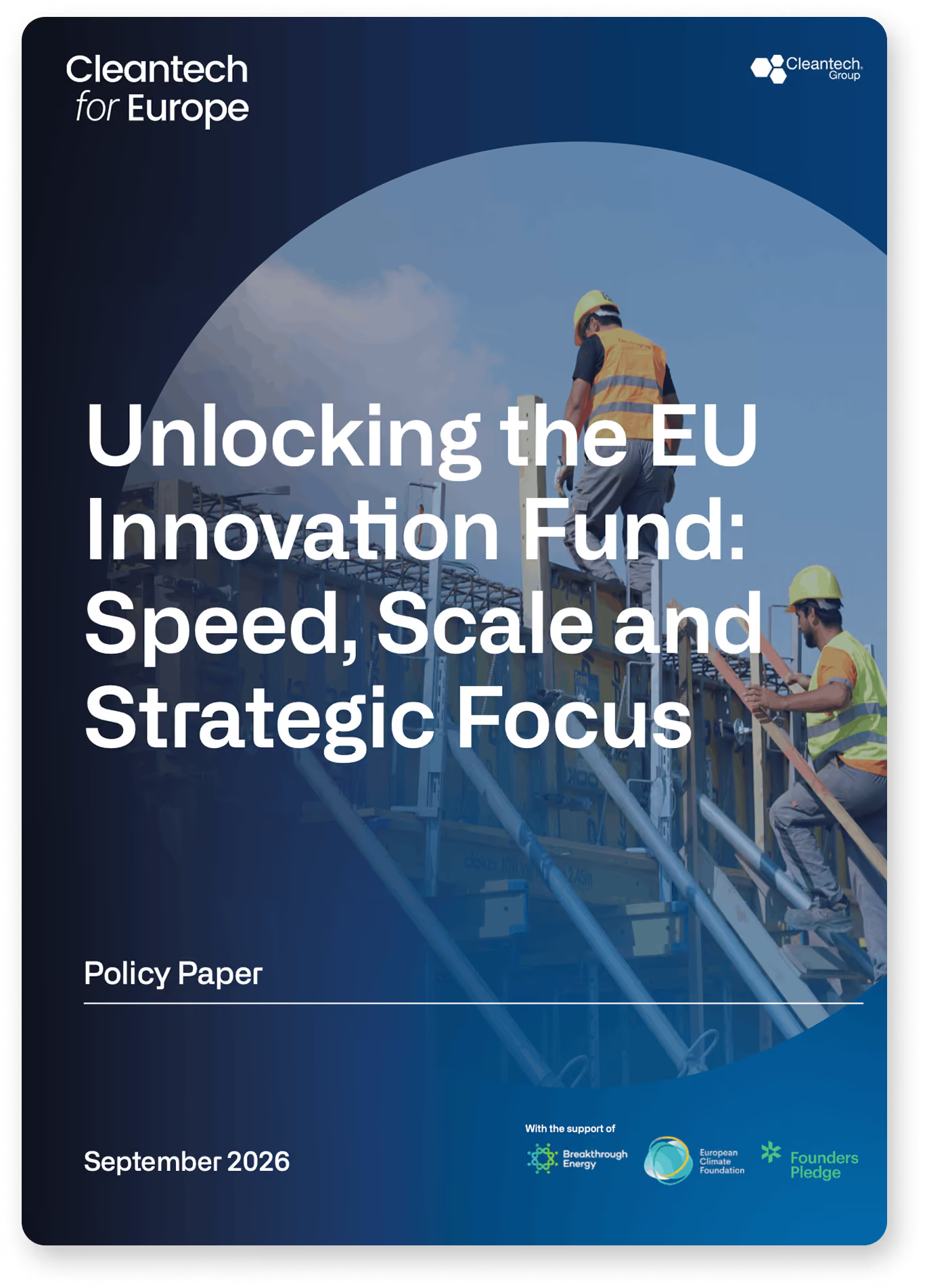
Our paper on the Innovation Fund reform, built on the experience of companies, investors and banks that have worked with the Fund, explains why so many selected projects stall before financial close: the 40% private capital requirement on eligible costs, unclear cumulation with State aid, an evaluation run entirely on paper, and GHG targets that push applicants towards optimistic commitments.
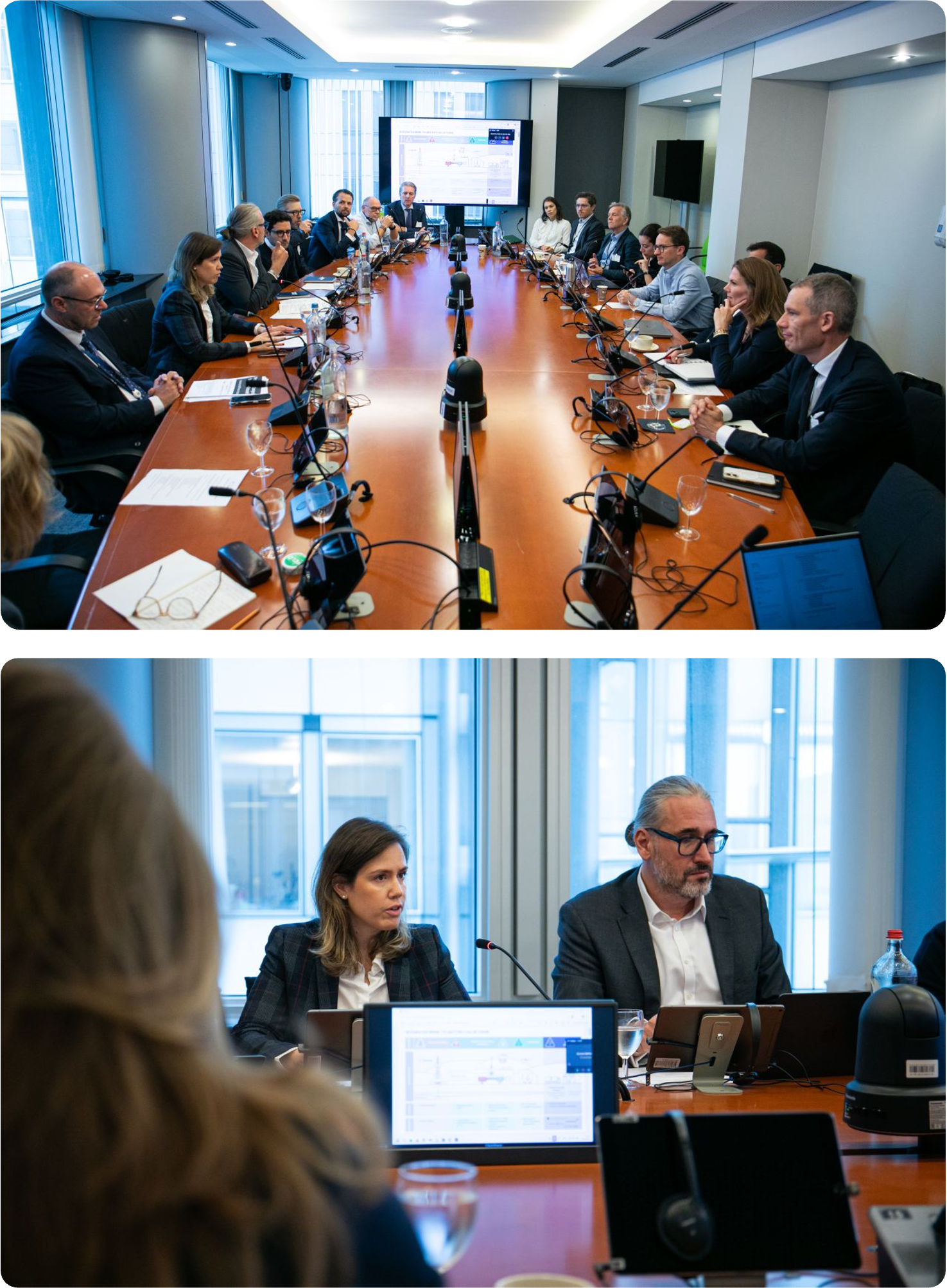
It makes the case for refocusing the Fund on scaling, meaning first commercial plants and their replication, a stage no other EU instrument covers between Horizon Europe and the deployment instruments. The paper was presented to MEP assistants at a Cleantech Friendship Group working breakfast in October.

Cleantech Friendship Group launches
its Geothermal Working Group

On 30 September, European Parliament Vice-President Martin Hojsík convened a closed-door roundtable to launch the Cleantech Friendship Group’s Next Generation Geothermal Working Group
The discussion brought together MEPs and fourteen organisations, from technology providers and project developers to investors and insurers, to look at what next-generation geothermal needs to scale in Europe.
Four priorities emerged: an ambitious Geothermal Action Plan focused on de-risking demonstration and first commercial projects; better use of the Innovation Fund and Modernisation Fund through the ETS review; finance matched to risk, separating drilling, technology and revenue risks; and the conditions for scale, from permitting and shared subsurface data to testing infrastructure, long-term offtake and early community engagement.
The stakes are high: next-generation geothermal could cost-effectively replace 42% of EU coal- and gas-fired generation (Ember), with baseload power that is homegrown and hard to attack. The Working Group will take these priorities forward in the coming months.
Listen to our podcast episode with VP Hojsík and Torsten Kolind (Underground Ventures) on what it will take to scale next-generation geothermal in Europe, on the latest episode of Time to Scale.
Cleantech for Europe is part of the Cleantech Friendship Group’s secretariat, along with #SustainablePublicAffairs

SAVE THE DATE
‍
Cleantech for Europe Summit 2026

Cleantech for Europe Summit is coming back to Brussels on December 1st. After a summer of wildfires and droughts, the closure of the Strait of Hormuz and the new China shock, Europe's fate seems to be increasingly dictated by world events outside of its control.
But this apparent lack of control hides decades of under-investing in Europe: under-investing in our technological sovereignty, in our defense, and of course in climate mitigation and adaptation. We urgently need to acknowledge the scale of the challenge, and to do all it takes to take back control of our destiny.
In this quest for a stronger Europe, clean technologies are our first line of defense. A homegrown cleantech industry can protect us from future energy crises. It can decentralize our energy system, making it harder to attack. And it can provide the industrial leadership jobs needed for our society to prosper.
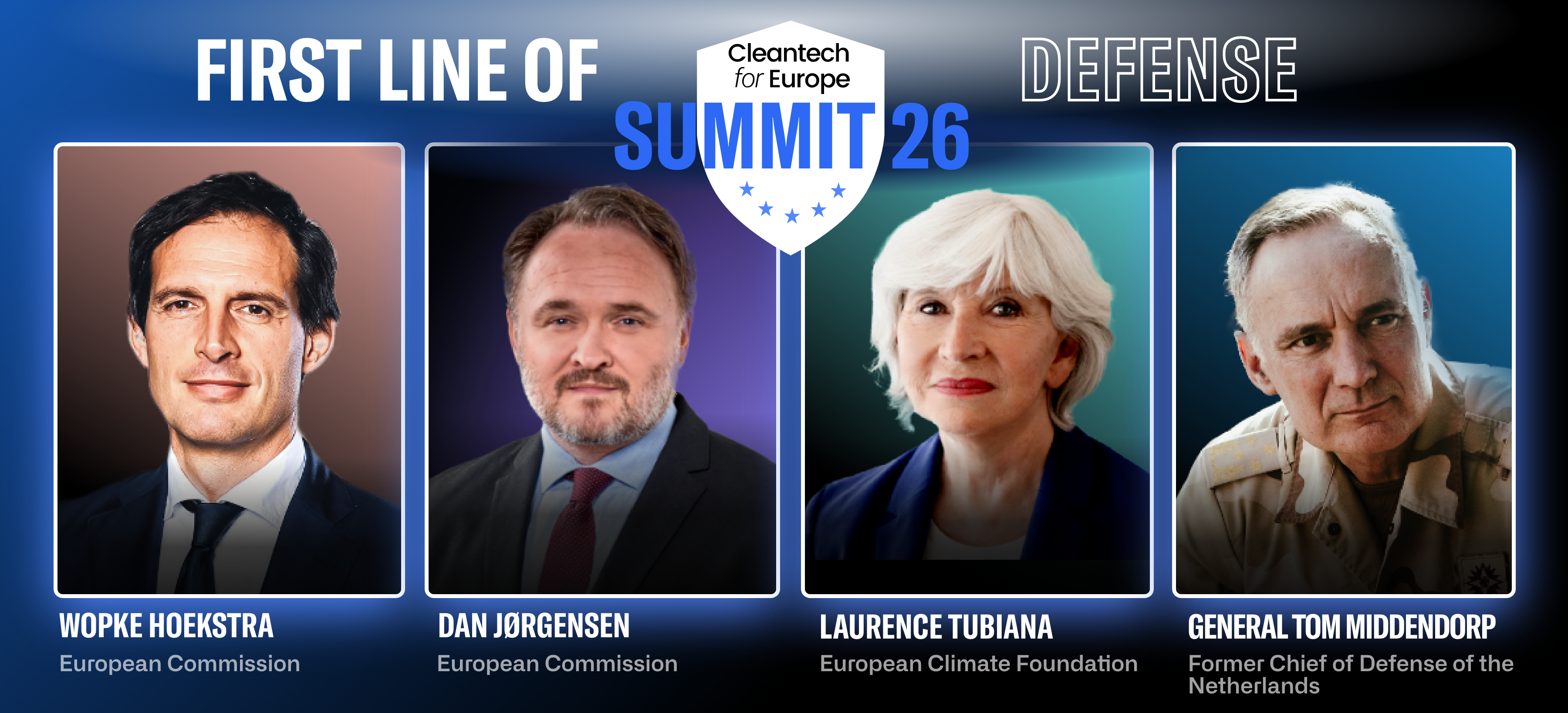
Cleantech for Europe Summit 2026 will gather the EU's top business, policy and thought leaders to chart a common path to a stronger, cleaner European industry. Speakers include Commissioners Hoekstra and Jørgensen, EP Vice-President Hojsík, MEPs Pereira and Grudler, former Chief of Defense of the Netherlands General Tom Middendorp, and many more.
Places are limited to 150 participants. Request your invitation here.
Download the printable version
Policy Voices
Policy Voices
Scale-up Coalition
Scale-up Coalition
Industrial Decarbonisation
EU Funding
EU Funding
Regional Initiatives
Company News
Company News
In the Press
In the Press
Voices of Innovation
Cleantech Investors
Cleantech Investors
Policy Voices
Policy Voices
Scale-up Coalition
Scale-up Coalition
Industrial Decarbonisation
EU Funding
EU Funding
Regional Initiatives
Company News
Company News
In the Press
In the Press
Voices of Innovation
Cleantech Investors
Cleantech Investors